The Winning CSP Podcast | Featuring Stefan Soerensen

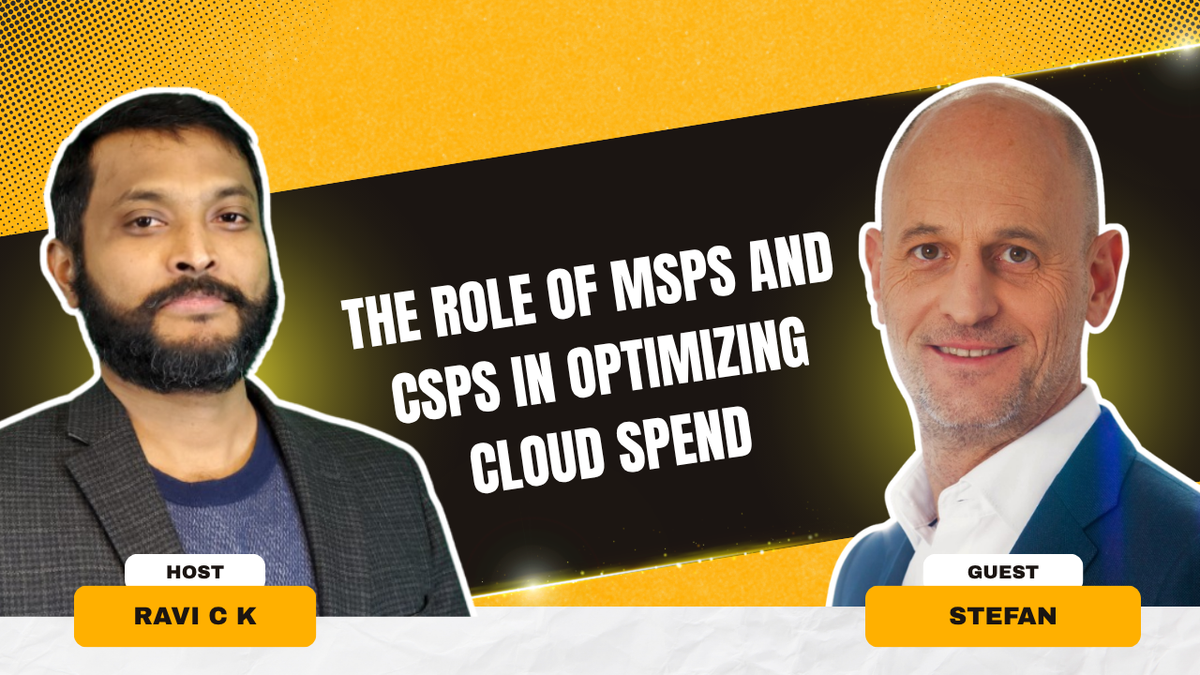
Real conversations. Real insights. From the people building the future of cloud & AI
Episode 1: https://youtu.be/jf4kl1J5Cwo?si=5hNN-2PRwvkEsYHq
Episode 2: https://youtu.be/e2nslCkucyc?si=KLoNbLNdc4Wtlf49
Episode 3: https://youtu.be/a-Cy_vApXsc?si=wod-qpHEkx1PqprL
🎧 NOW STREAMING — 3-PART SERIES
Stefan Soerensen is VP of Digital Business at MediaLine — a full-service IT and managed services provider with deep roots in the Microsoft ecosystem. In this three-part series, Stefan sits down with Ravi to unpack what digital transformation actually looks like on the ground, how automation reshaped their CSP operations, and what the future holds for MSPs navigating a world increasingly defined by AI and agentic systems.
From processing invoices manually in Excel to building a proprietary AI agent stack deployed locally in their own data centres, Stefan's journey is a masterclass in pragmatic innovation — and an honest account of what it takes to evolve a traditional reseller into a future-ready managed services powerhouse.
This series covers everything from HYBR's role in automating billing workflows, to the cultural mindset shifts required to embrace AI internally, to Stefan's philosophy on platform selection, offboarding governance, and the operational backbone every MSP needs before chasing the next shiny tool.
🔹 Episode Timestamps
- 00:00 Introduction & Stefan's Background
- 02:09 Life as VP of Digital Business at MediaLine
- 03:49 What Digital Transformation Means for CSPs
- 07:07 The Shift from Manual Billing to Automation
- 10:37 HYBR's Impact on MediaLine's CSP Operations
- 16:10 Customer Self-Service & Co-Browsing Models
- 27:41 AI Adoption, Copilot & Internal Enablement
- 32:11 Building a Company AI Agent (Locally Deployed)
- 36:04 AI Culture, Mindset & Responsible Usage
- 44:37 Future of MSPs/CSPs in an Automated World
- 50:05 Security, Governance & Offboarding Pain Points
- 01:10:45 "Do Less with More" — Rethinking Scale
- 01:12:01 Final Advice for MSPs & CSPs
- 01:20:07 MediaLine Services & Where to Connect
Stefan's Background & Role at MediaLine
Stefan's path into digital leadership was anything but linear. He entered IT in the 1990s — not through formal training, but through necessity, like many of his generation who taught themselves programming when the industry was still figuring itself out. From web development he moved into pre-sales, then technical sales, gradually accumulating responsibility across multiple companies until he found his home at MediaLine.
Today, Stefan owns everything that touches digital transformation and digital business at MediaLine — both internally and in service of their customers. That includes the platforms MediaLine uses to automate customer-facing transactions, the innovation agenda, and the strategic thinking about where the business needs to go next.
"I got a better understanding of processes — business processes. I turned to MediaLine, and I developed my role into someone who drives innovation for our customers." — Stefan Soerensen, VP of Digital Business, MediaLine
What Digital Transformation Really Means for CSPs
Ask ten people what digital transformation means and you'll get ten different answers. Stefan's definition is refreshingly operational: it starts with data. Not just having it, but making it available when you need it, in the form you can act on it.
For MediaLine, the explosion of Azure cloud transactions forced a reckoning. The sheer volume of data — master data, contact data, transactional data — made it impossible to keep running on manual processes and spreadsheets. Transformation, in Stefan's view, is the journey from "someone enters this data" to "this process runs automatically."
From Excel Chaos to Automated Billing with HYBR
The pivot to Microsoft's New Commerce Experience (NCE) is where Stefan's story gets concrete — and uncomfortable. When Microsoft changed how licenses were booked, billed, and reconciled, MediaLine found themselves drowning in raw CSV files that required significant manual processing just to produce an invoice. Sometimes invoices were delayed by a month or two.
The complexity wasn't just the volume — it was the variety. Each customer had different purchase dates, different uplift structures, different margin expectations. Setting a flat 15% across the board made no business sense. Stefan's team tried a range of tools, from expensive enterprise platforms to budget alternatives. None of them solved the problem cleanly.
Then they encountered HYBR — initially through an acquisition of a company doing Azure Stack Hub billing. What followed was a transformation they hadn't expected: HYBR didn't just handle the billing, it abstracted away the entire complexity of the Partner Center API, allowing MediaLine to define individual billing plans per customer, automate reconciliation, and get invoices out on time.
"When we were up and running with HYBR, it was like — you don't have to go and download invoice files, recon files, figure out which customer is which. We instantly dropped everything we were doing with the Partner Center API. We hadn't to care about it anymore."
— Stefan Soerensen
The impact was measurable: what had previously consumed roughly a week of effort per billing cycle — with a one to two month lag in customer invoicing — was now automated. Faster invoicing meant faster cash flow, fewer errors, and freed-up capacity to focus on higher-value work.
Self-Service, Co-Browsing & the Human Side of Automation
Stefan makes an important distinction that many automation advocates miss: self-service isn't the same as abandonment. MediaLine uses HYBR's marketplace capabilities to let customers manage their own licenses — but they don't expect every customer to do it alone.
Some customers, particularly those with large licensing bases, feel uncomfortable making changes independently. A migration from E3 to E5 licenses, for example, requires confidence in timing and implications. Stefan's team handles this through co-browsing — joining the customer in the platform, walking them through the steps, confirming the action together. It's automation enabling the human relationship, not replacing it.
- Customers who self-serve on routine tasks (adding licenses, checking usage) still want expert guidance for migrations and complex changes.
- Co-browsing creates shared confidence — the customer executes, the CSP validates. Trust is maintained without creating dependency.
- The right platform becomes the shared language between CSP and customer, not a black box that only the provider understands.
Stefan also raised the integration frontier: connecting HYBR via API to ITSM systems like ServiceNow or procurement platforms like SAP Ariba, so that an HR onboarding event can automatically trigger a license purchase — no email, no ticket, no manual step.
AI Adoption: Building the Company AI Agent
When it comes to AI, Stefan's approach to MediaLine's own transformation is instructive. Rather than wait to understand AI well enough to sell it, they built it internally first. MediaLine deployed a private AI stack in their own data centres — running large language models locally with no data leaving the building — and called it their Company AI Agent.
Every employee was encouraged to use it. Use cases ranged from analysing dense RFP documents (50+ pages of customer requirements distilled into a bid/no-bid recommendation) to writing, summarisation, and research. The privacy constraint that might have been a blocker became a selling point: when sales teams talked to customers about AI, they could honestly say "we use it ourselves, and here's what we built — we can build you the same."
"Our decision was not everybody has Copilot, but one of the first decisions was — let's set up something in our data centres, deploy models, and create something. We call it the Company AI Agent. Everybody is pushed to use it."— Stefan Soerensen
AI Culture, Mindset & Responsible Usage
Stefan's philosophy on internal AI adoption avoids two common failure modes: banning AI out of fear, or leaving adoption entirely unmanaged. If employees aren't given a sanctioned tool, they'll use ChatGPT anyway — with all the data privacy risks that entails. If adoption is mandated without guidance, resentment and shallow use follow.
MediaLine's approach: provide the tool, encourage its use, and learn from what people discover. Stefan actively asked employees to share what they got out of it. That feedback loop shaped how the AI offering was developed for customers — use cases bubbled up from actual internal experience, not from theoretical product planning.
The Future of MSPs and CSPs in an Agentic WorldStefan's vision of where MSPs and CSPs are heading is ambitious but grounded. The transactional model — customer says "give me 100 licenses," CSP processes the order — is not the future. The future is capability-based services where the CSP is embedded in the customer's business process layer.
In Stefan's framework, a new hire event in an HR system should trigger an onboarding agent, which calls a purchasing agent at the CSP, which procures the right M365 license, requests the hardware from the supplier, and delivers everything — without a human touching a ticket in between. HYBR becomes not a marketplace to click through, but an API endpoint in an agentic workflow.
"Maybe in future we don't need the marketplace anymore. You're running an agentic framework — you have a purchasing agent in your provider company. And this agent knows where to go and what to book."— Stefan Soerensen
When asked how far out this future is, Stefan's answer was characteristically direct: "For me, we're going to have it tomorrow." But he immediately balanced that optimism with pragmatism — the foundations (clean data, open systems, API-first architecture) have to be in place first. The agentic future is built on boring basics done well.
Security, Governance & the Offboarding Problem
One of the most practically valuable segments of the conversation centres on a challenge every MSP faces but rarely discusses openly: offboarding. Stefan points out the asymmetry clearly — when someone joins the company and doesn't have access to a tool, they complain immediately. When someone leaves and their access isn't removed, nobody notices. Until there's a compliance audit, a data breach, or a former employee with lingering access to sensitive systems.
Stefan's prescription is dual: process and tooling. Role-based identity management (ideally through Entra/Azure AD with single sign-on) can remove a user from most connected systems in one action. But legacy systems, niche SaaS tools, and applications that don't support external identity providers require tracked offboarding checklists and dedicated tooling to orchestrate the cleanup.
- Offboarding is harder than onboarding — and the consequences of getting it wrong (compliance failures, security gaps, wasted spend) are serious.
- Central identity management with SSO reduces offboarding to a single action for connected systems — but not every tool supports it.
- Platforms like HYBR can orchestrate multi-system offboarding events: remove M365 license, revoke GitHub access, disable AI tool subscriptions — triggered by a single action.
- Unused licenses are a hidden cost centre. Spend visibility tools that surface unassigned licenses and anomalous usage spikes are essential.
"Do Less with More" — Rethinking Productivity & Scale
One of the most quotable moments in the series comes when Stefan inverts the familiar Satya Nadella phrase. Instead of "do more with less," Stefan's operating model for MediaLine is "do less with more customers" — automate away the repetitive transactional work so that the same team can serve a growing customer base without proportionally growing headcount.
This isn't about cutting costs. It's about creating the breathing room to operate on the business rather than inside it. As Stefan puts it: you can't think about your customers' future if you're still manually processing invoices and chasing down license reconciliation files every month.
Final Advice for MSPs & CSPs
Asked for the one thing MSPs could change today to become more successful, Stefan gave a layered answer that is worth quoting in full:
"Always listen to your customer — what he thinks he needs — and try to figure out how to deliver that. If you want to automate, you need to standardize first. But understand the customer, then figure out which parts of your offering you can use, and how you can evolve it. Then later, if you can standardize, automate. And if you see something done repeatedly — find a platform that takes it from you."— Stefan Soerensen
His closing metaphor is one to carry: building an MSP is about constructing an operational backbone — a spine that handles all the transactional flows reliably, invisibly. Only once that backbone is solid can you build differentiated offerings, digital platforms, and customer-facing innovations on top of it. The backbone doesn't make you special. But without it, nothing special is possible.
Key Takeaways for CSPs & MSPs
- Data first: Clean master data is the prerequisite for every digital transformation initiative. Don't automate a mess.
- Automate the transactional: Billing, license reconciliation, margin calculation — these should run without human intervention. Every hour spent on these is an hour not spent on customers.
- Pick open platforms: Stefan's strongest platform advice — choose tools that have open APIs, a clear vision, and room to grow. Platform lock-in is the enemy of future agility.
- Dogfood your AI: If you want to sell AI services, deploy AI internally first. Use cases and sales confidence come from real experience, not theoretical knowledge.
- Self-service + human guidance: Customers who self-serve on routine tasks still need expert support for high-stakes decisions. Design your service model to offer both.
- Offboarding is a security priority: Build the process and tooling for offboarding as carefully as you build onboarding. The risks of inaction are compliance and security failures.
- Build the backbone first: Standardize core operations before building differentiated offerings. A solid operational spine is the prerequisite for scale.
- "Do less with more customers:" Automate repetitive work to create the breathing room needed to think strategically and serve a growing base without burning out.
Transcript
Introduction
[00:02:00] Ravi: Hi Stefan, thanks for joining the Winning CSP podcast. How is it going?
[00:02:02] Stefan: Hi, thanks for having me. It's all good here. Thanks.
Stefan's Background & Role at MediaLine
[00:02:09] Ravi: So, can you give us some background about life as a VP of digital business at MediaLine?
[00:02:16] Stefan: Yeah, sure. My background is not really technical. I started in IT back in the nineties, but in that time, everybody who was able to learn programming caught on from scratch. So I did the same. I started a little bit of web development, and then developed myself into more like a pre-sales role, or more technical sales role, into sales. And yeah, ended up selling software and recognising the value of software. Each company I entered, I got a little bit more responsibility for parts of software, and I got a better understanding of processes, business processes. So I turned to MediaLine. When I joined MediaLine I developed my role into someone who is innovation inside the company, trying to drive innovation for our customers. For now, I've got the responsibility for everything that has to do with the digital transformation, digital business inside MediaLine and also for our customers. So today I'm taking care of all our platforms for digital transformation — to do business in a more automatic way with our customers, and also helping customers to understand how they can transform their own business.
What Digital Transformation Means for CSPs/MSPs
[00:03:49] Ravi: Got it. So what does digital transformation mean for CSP or MSP business? How do you define digital transformation for a beginner, with respect to CSP and MSP businesses?
[00:04:07] Stefan: I would say it has to do a lot with gaining more data, getting the data you already have. I mean, dealing with Microsoft was always about sharing data, but it changed somehow. The amount of transactions had a huge growth, at least for us. When Microsoft invented public cloud computing, the amount of data for Azure had a huge growth. So what we had to make sure was that we have all the data ready and available, at the time we need it. Doing digital transformation means having the data, then being able to transact like a robot process. So that's maybe the first part — there's some data, you make it available, and you start building processes that run automatically.
[00:05:20] Ravi: When you say data, what type of data are we talking about?
[00:05:25] Stefan: It's all kinds of data. It's like the master data you own. Usually you do not have really clean data, but it's very important to have your master data — like know your customer, know who it is, how your systems are looking at your customer. That's not always the same. You can have a customer entity, but you have multiple accounts. You have to make sure that you know which one is the customer you're talking about. That's master data. Maybe the contacts you are interacting with, the persons you are interacting with. But also the transactional data. Whenever you're doing business, there's a kind of transaction and there's data. Earlier times we were entering data manually, creating invoices manually. Today that wouldn't be possible for us.
CSP Challenges & The Shift from Manual to Automation
[00:07:07] Ravi: In terms of your transformation projects or initiatives that you've pioneered or overseen, can you share some of the successful transformations, and the key factors in making it work?
[00:07:38] Stefan: Sure. I think there are a few. We can pick the CSP part, because that was a big thing back then when Microsoft changed everything. When Microsoft changed the way they interact with their partners, we had a lot of troubles keeping pace with information and understanding what was happening, trying to figure out how we could change our processes — our internal processes, even the process towards the customer. Because a lot of our customers are still relying on us, calling in and saying "can you please book some licenses for me." And we figured pretty fast that doing it manually wouldn't work. You get a huge table with CSV data for invoicing, it's not cleaned, and you have to get the right data out of it, address the customer with the right issue. We did it manually first hand, and yeah, that was a lot of fun. You had like Excel tables...
Solving Billing Complexity with Automation (HYBR Impact)
[00:10:37] Ravi: So how did you solve this problem? It must have been really hard to do it manually. You mentioned how tools like HYBR helped — but it would be great to hear how you went from manual to automated process.
[00:12:42] Stefan: That was a huge relief. When we were up and running with HYBR, it was like — you don't have to go there and download any invoice files, recon files, to figure out which customer is which. You don't have to care about how to calculate the uplift or the margins you want to add, because that's done by HYBR. It was easy to set up plans for each customer individually — how you want to invoice them, what they're going to pay. Getting the data into the platform, we didn't have to care about it. We instantly dropped everything we did with the Partner Center API. We hadn't to care about it anymore. That was a really, really great experience. Importing customers, getting customer data in there, defining your payment plans and your offers, and getting the invoice data out of it.
[00:14:34] Ravi: How much effort per month did it help save, approximately?
[00:14:41] Stefan: I would say we had like one week of work in total to get invoices ready. And we had like one month, sometimes two months delay on invoices towards the customer. It's not only the amount of work you save — it's also, you don't generate cashflow problems because you're not delayed by months on billing.
Customer Transformation & Self-Service Evolution
[00:20:47] Ravi: Shifting the responsibility from your side to the customer — enabling self-service — that's kind of the nirvana ideal that we want HYBR to provide. But I feel like the missing piece is often the integration from the customer's own systems. Do you think customers will be able to fully self-service, or will you still have customers sending you an email saying "hey, can you do this for me?"
[00:21:47] Stefan: We still have them and I guess we will have them forever. That's okay for me because I think that's one of the values. They don't have to care at all. Sometimes customers are scared — they have a huge licensing base and they want to switch from E3 to E5. They could use the platform themselves, but they're unsecure. So you can do co-browsing — they're in the platform, you're sharing screen, and you tell them "it's okay, you can press it now, and it will immediately book." It's always a lot of words, but sometimes it's good to have a shared picture where everybody sees the same and works along.
AI Adoption, Internal Enablement & Future Expectations
[00:29:01] Stefan: One thing is, like you said, Copilot. We're selling Microsoft licenses. Of course customers want us to explain how they could leverage Copilot, how they should use it, how they should implement it — preventing leaking CEO confidential information is what we heard. We're the advisor. But I think there's a major shift in our business from transactional business. We want to automate, we want to interact automatically, we want different systems to interact. AI is accelerating that shift. But it's not only about selling AI tools — you need hardware, software stack, and consultants to explain how customers can transform their business. And that's where we are. We decided even a year ago — we need to build good services to help customers understand the value and get their feet in.
Building AI Capabilities & Training Teams Internally
[00:32:11] Stefan: That's maybe the hardest part. Setting up a team capable of understanding what everything is about is one thing. So you can hire smart people and they will understand it. But the other part is — you have to do the same inside your company. Even the salespeople. Do you train common salespeople to understand what AI is about and what your offering is about? Our decision was not everybody has Copilot, but one of the first decisions was: let's set up something in our data centres. Let's run a huge stack, deploy models and create something. We call it the Company AI Agent, because that's our brand — Company Cloud. We built our own AI stack with different models, and everybody in the company was pushed to use it. If a customer has 50 pages of requirements, you drop it into the platform — it's a locally deployed model, so no privacy issues — and let the model create a short document about whether this is something you want to bid on. So we're always working on use cases and using our local entity of AI. We don't run into any data issues or privacy issues.
AI Culture, Mindset & Responsible Usage in Teams
[00:36:38] Stefan: It's a matter of mindset. You could tell people "don't use AI because I want you to work hard, not smart." But if you don't offer them anything, they're using ChatGPT for sure — and maybe you run into privacy issues. For us, it's: "please use any tool you can use, and talk to me about what you used it for, because I want to learn from you what you can get out of it."
Future of MSPs/CSPs, Automation, Trust & Business Evolution
[00:44:53] Stefan: I think we're not keeping this transactional business as isolated business — because our customers are, in the best case, moving to business capabilities, end-to-end processes. They don't want to say "I need M365 and a computer." They want to have an onboarding process, and you deliver everything around it. You need to build an interface with your customers where they can connect their business process. So if they tell you "I have a new hire, I need something," you need to be able to connect all your systems to build around your services so you can expose capabilities as an API endpoint for their business process. Maybe in future we don't need the marketplace anymore. You're running an agentic framework — you have a purchasing agent in your provider company, and this agent knows where to go and what to book. It is called by the onboarding agent, which is exposed as an onboarding API.
[00:47:35] Stefan: For me, we're going to have it tomorrow. But I guess there's a lot of basics to do first. Like the digital transformation story — making data available, switching to systems that are open and have APIs. It will take some more years to be ready. But it's about small steps, one business process after the next.
Security, Governance, Offboarding & Spend Optimization
[00:54:17] Stefan: Offboarding is harder than onboarding. If you're onboarding somebody, they will always complain if they don't have access. But if you offboard somebody, nobody's complaining. So work like that. Part of it is tools, and part is processes. You need to have a proper business process for offboarding that covers everything, maybe role-based. And you need to find a way to reduce the number of necessary steps — ideally having central identity management with role-based access, where you can just pull out the user and it takes away their single sign-on access. But not every application supports external identity providers, so you also need to keep track with dedicated tools.
"Do Less with More" — Rethinking Productivity & Scale
[01:10:45] Stefan: Satya said do more with less — I say do less with more customers. Free me from all transactional stuff, repeating stuff that everybody could do, and let us work on things that can bring us further.
Final Advice: Understanding Customers & Eliminating Busy Work
[01:12:01] Stefan: Managed service is still very customer-specific. Always listen to your customer — what he thinks he needs — and try to figure out how to deliver that. If you want to automate, you need to standardize first. But the first thing is to understand what a customer really needs. Then figure out which parts of your offering you can use for that. Then later, if you can standardize, automate it. And if you see something done repeatedly, try to find platforms that take it from you. Our best experience was transforming our Microsoft business with HYBR — customer is happy, we are happy, less work, more customers, and quality is good.
[01:16:00] Stefan: You need to create an operational backbone that is really rock solid. It works. It's like a spine — it doesn't break. Transactional stuff runs through your operational backbone. It's coming in, running through, coming out somewhere. If your backbone is ready for these transactions, then you can start using platforms, building platforms, building offerings. Maybe digital offerings. But you create it on top of something you have to have first — connectable systems, APIs, connections, integrations — and then let things run through: invoicing, hire-to-retire, purchase-to-pay, whatever you're doing.
[01:22:40] Stefan: Be cautious with any platform you want to work with. Be sure that it is open enough and there's a vision behind it, so you don't get stuck. Whenever you pick any platform, be sure it's open and be sure it develops. Later on, bring more services, change your service, use it, leverage it to bring more services to the market.
[01:25:00] Stefan: It's always about people. We've evolved to SaaS and you can acquire even enterprise software through the internet, but it's always about people. Conversations give me a good feeling — ideas are coming out of conversations. If you're dealing with smart people, with good people, then you can develop yourself further.
[01:26:14] Stefan: Likewise. Thanks for having me here. It was a pleasure talking to you, as always.
Ready to automate your CSP operations like MediaLine?
See how Hybr® can streamline your billing, eliminate manual reconciliation, and unlock scalable growth for your CSP/MSP business.
👉 Book a personalized demo with Hybr® and transform your operations today
CSP Billing Ultimate 2026
Elite Growth Platform for Ambitious Businesses